SITE 2024
In Pacifica communities, shared food rituals have birthed new cultural symbols—objects such as KFC buckets, fish-and-chip paper, and coconut cream cans—that now function as emblems of identity. Pacifica populations in New Zealand experience disproportionately poor health outcomes, exacerbated by unhealthy diets, limited access to nutritional resources, and a lack of physiological adaptation to Western dietary norms. Often stereotyped as lazy or gluttonous, these communities are subject to reductive judgments that disregard the deep-rooted traditions and cultural values informing their choices. Within this context, objects like the KFC bucket assume the symbolic role once held by the kava bowl, representing communal sharing and identity preservation. Yet this symbolism underscores a core paradox: the challenge of maintaining cultural continuity without reinforcing stereotypes or contributing to health-related detriments. The artist’s practice engages directly with this tension, honoring the emotional weight of these transformed objects while interrogating the implications of their elevation into cultural icons.
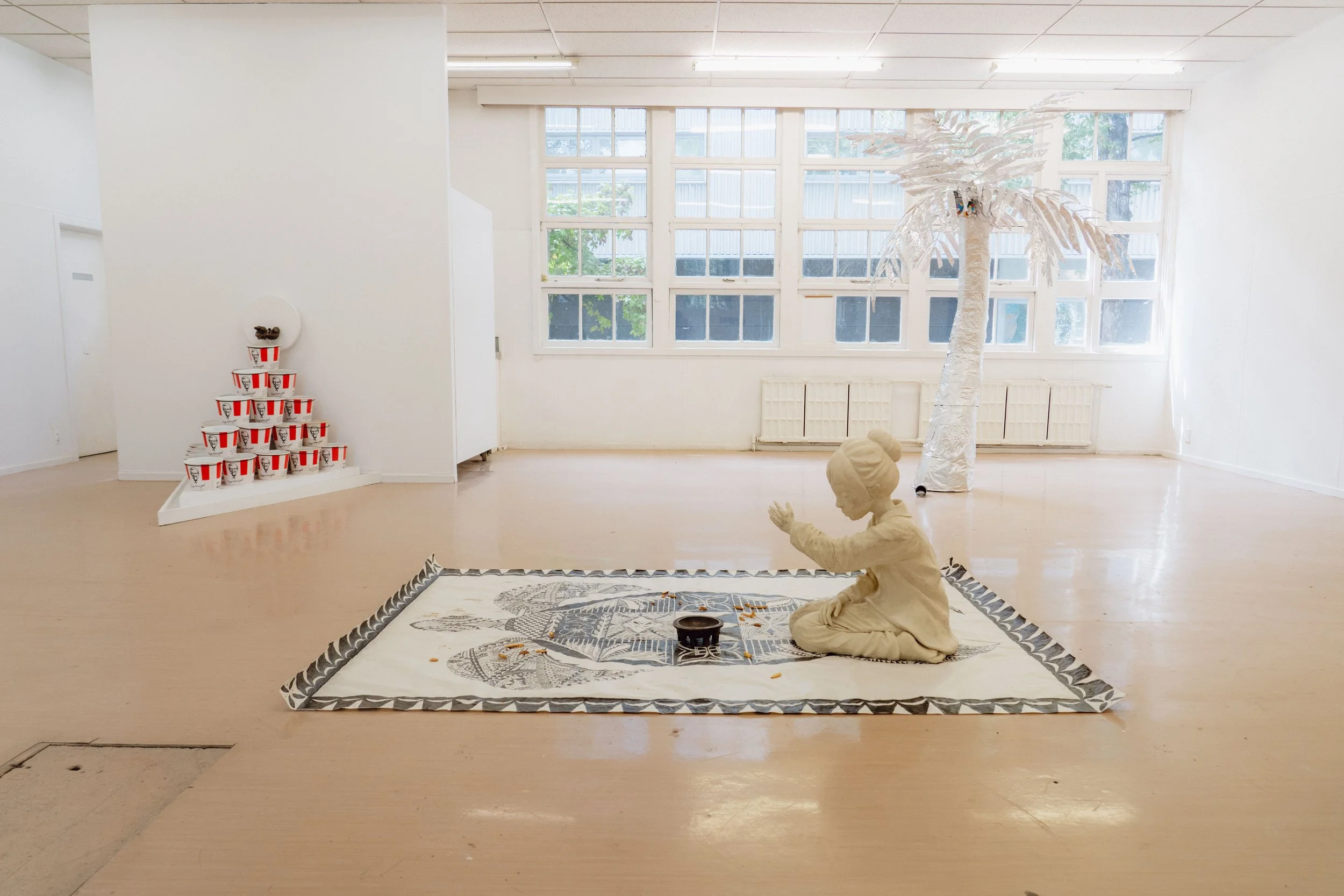
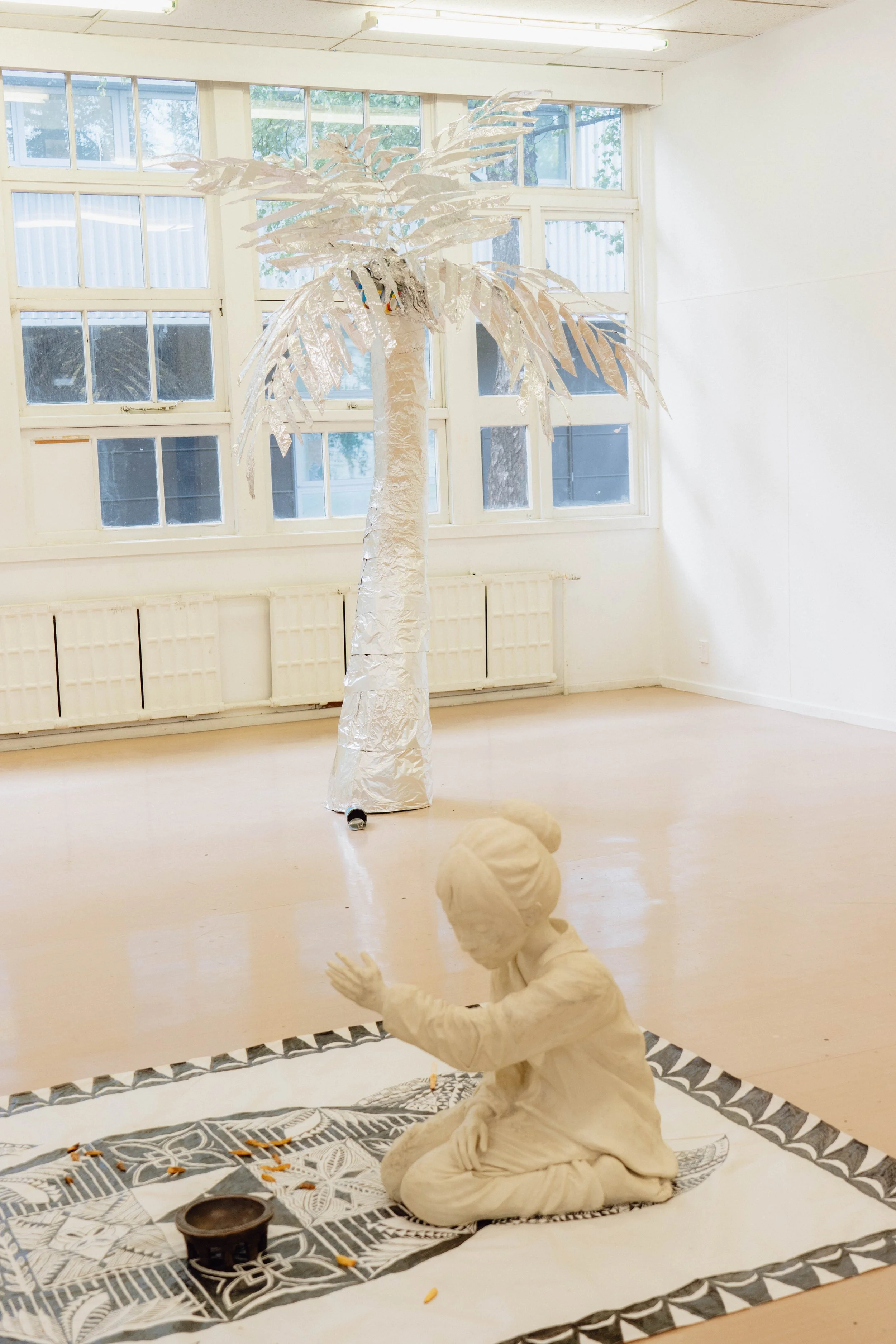
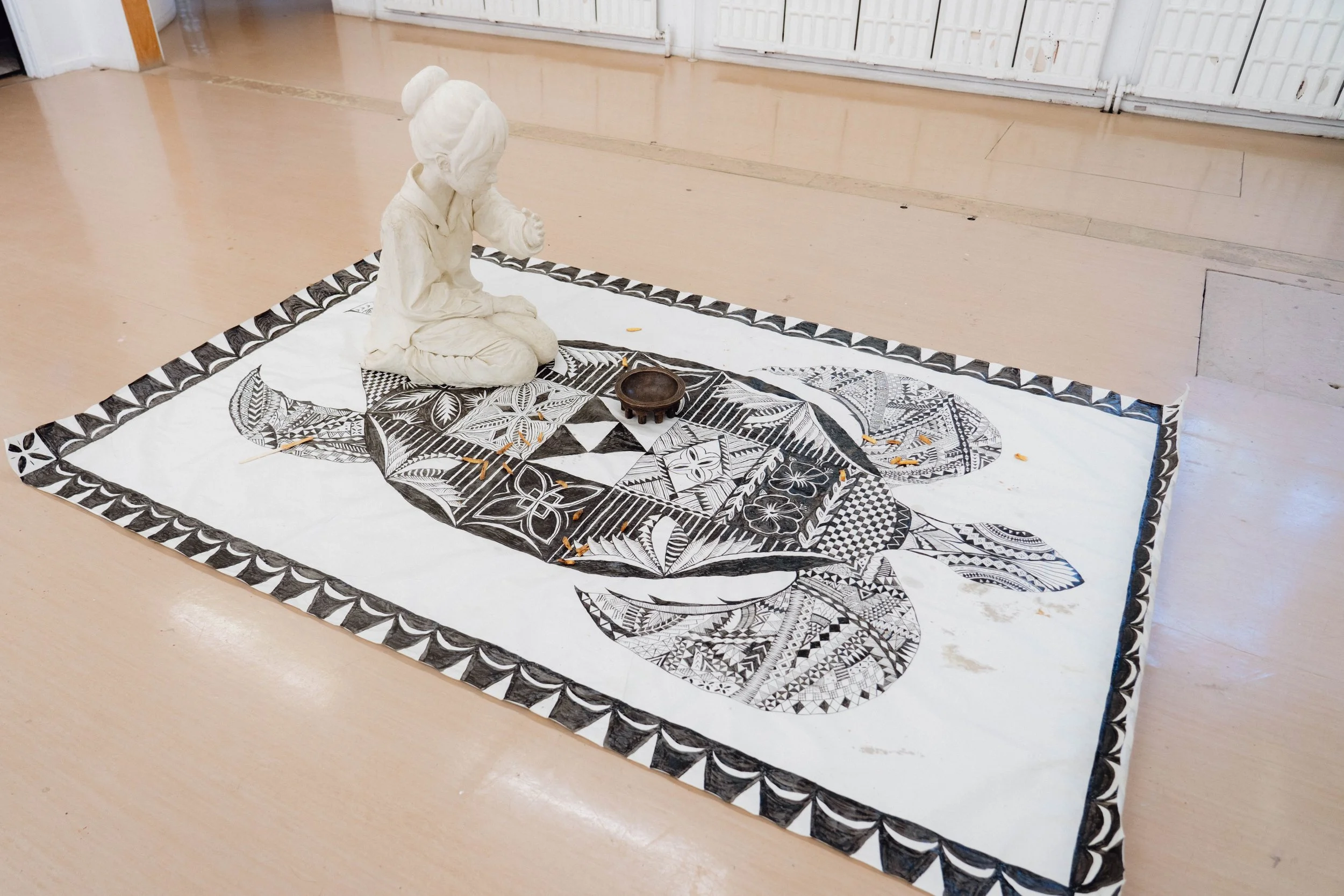
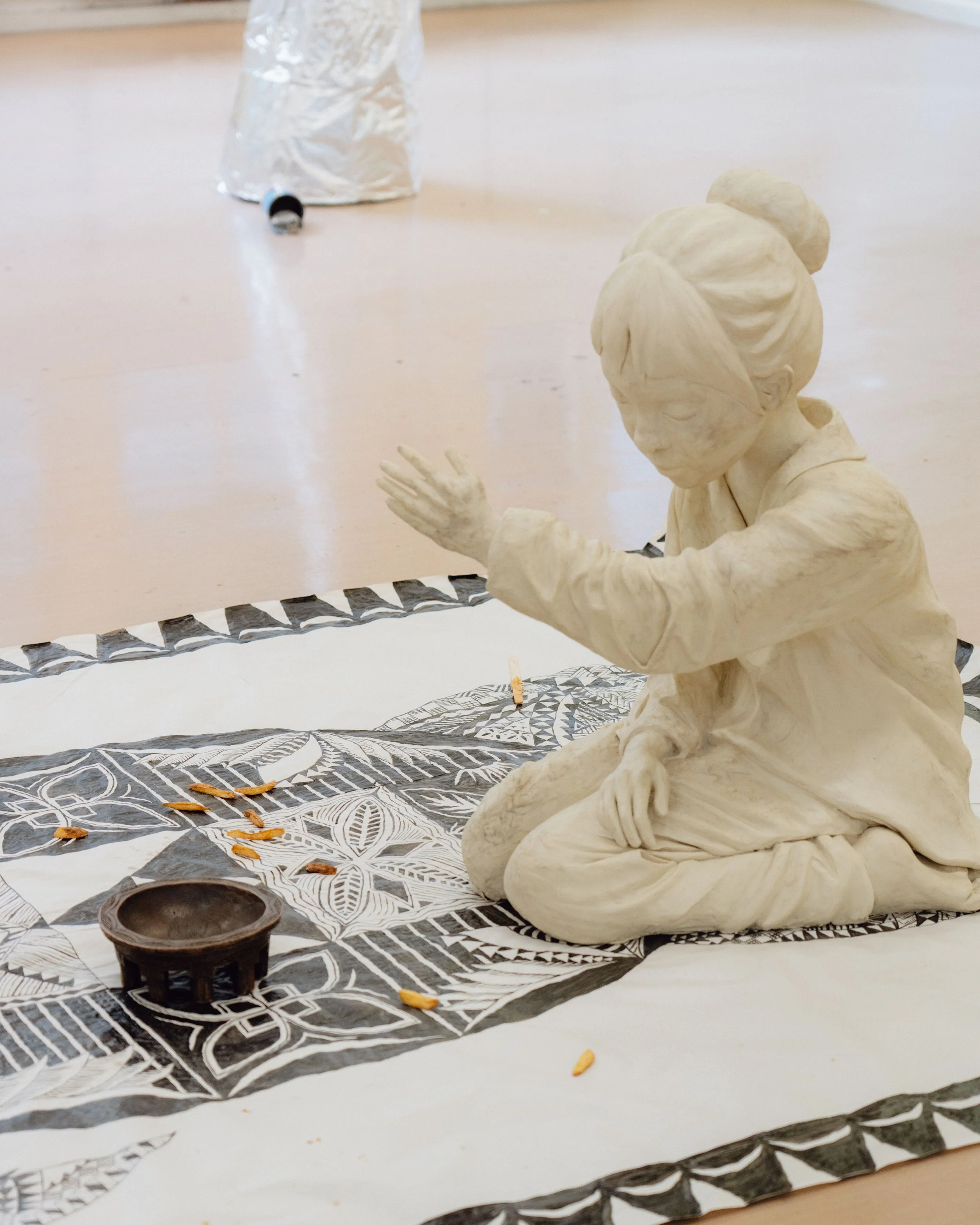
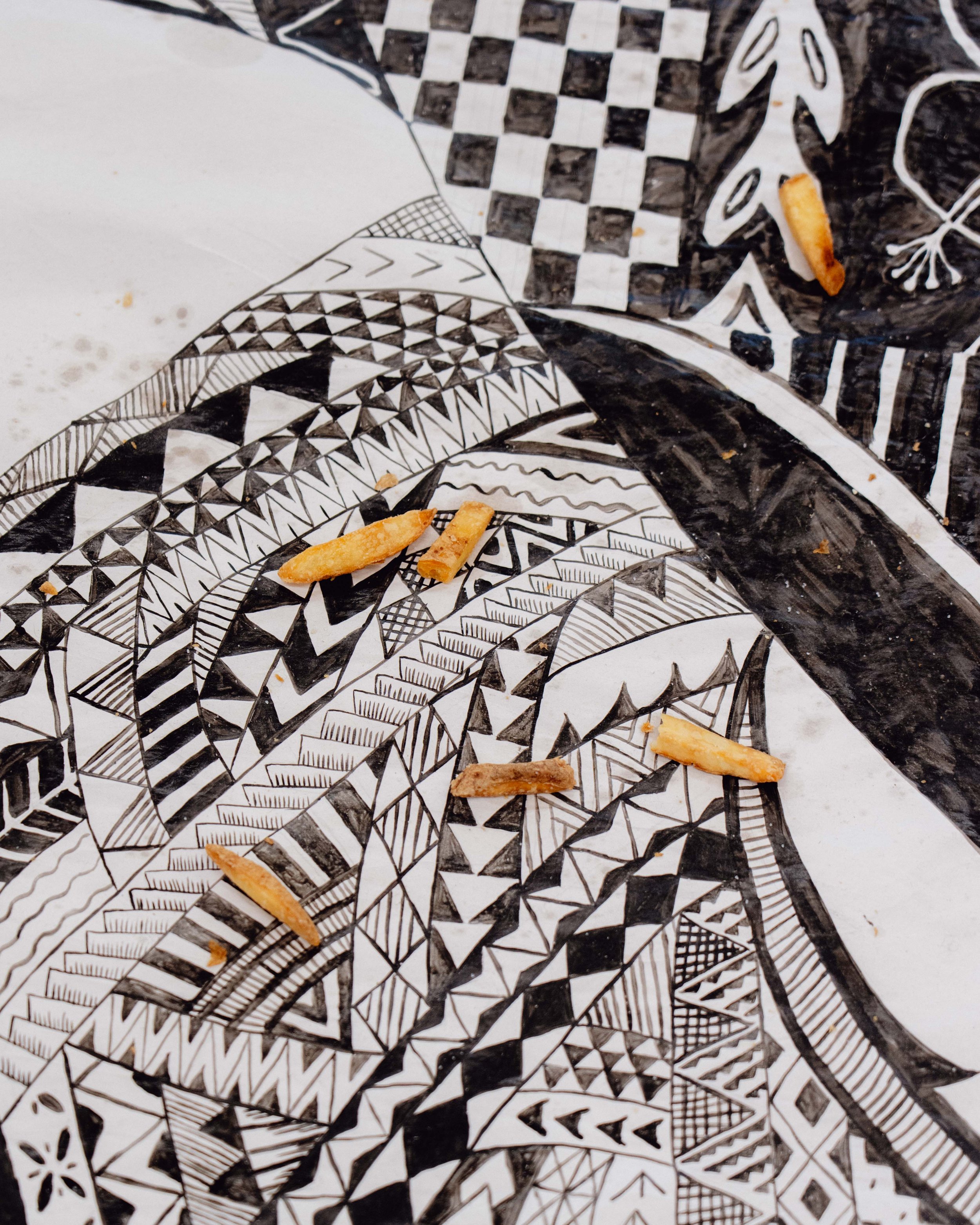
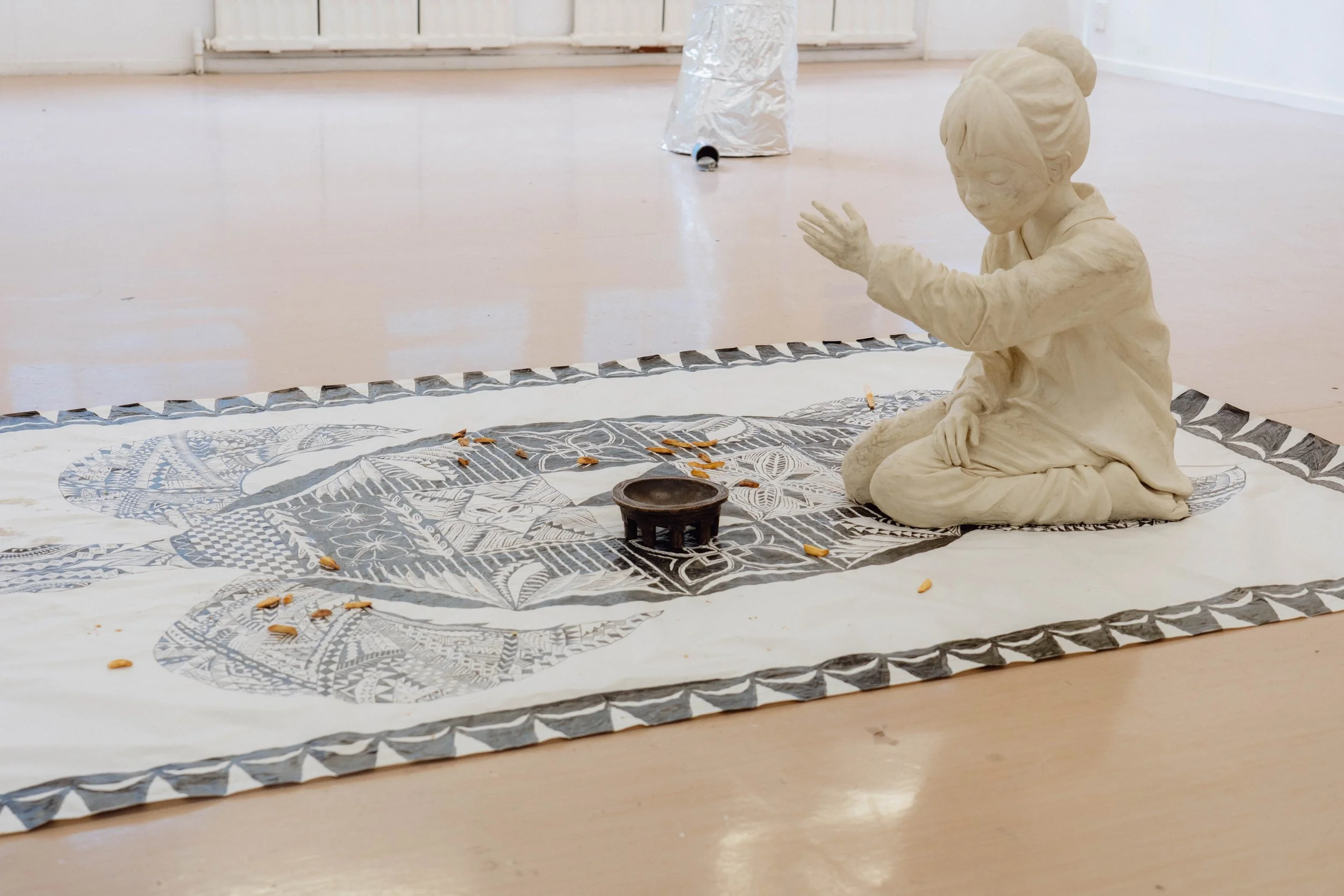
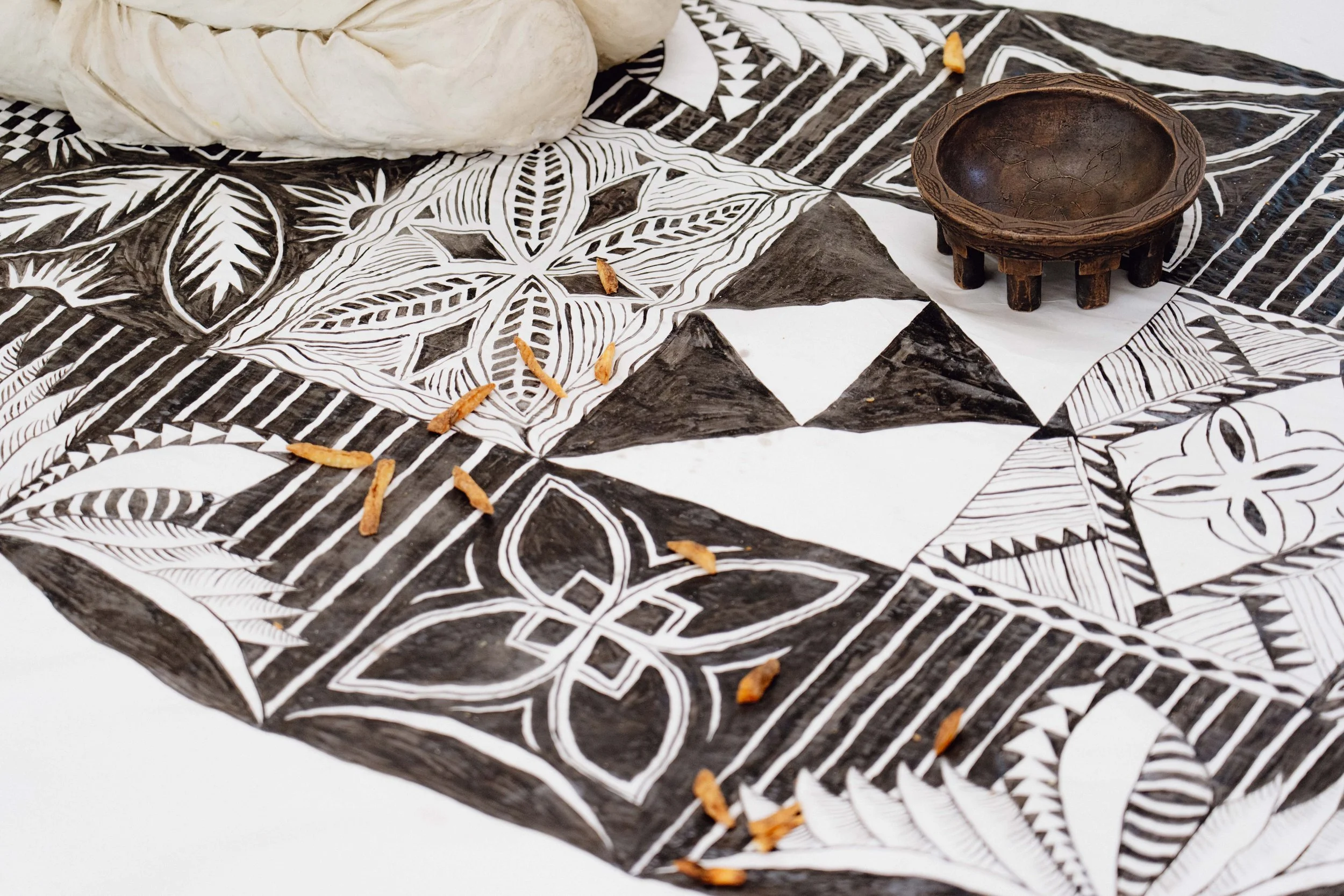
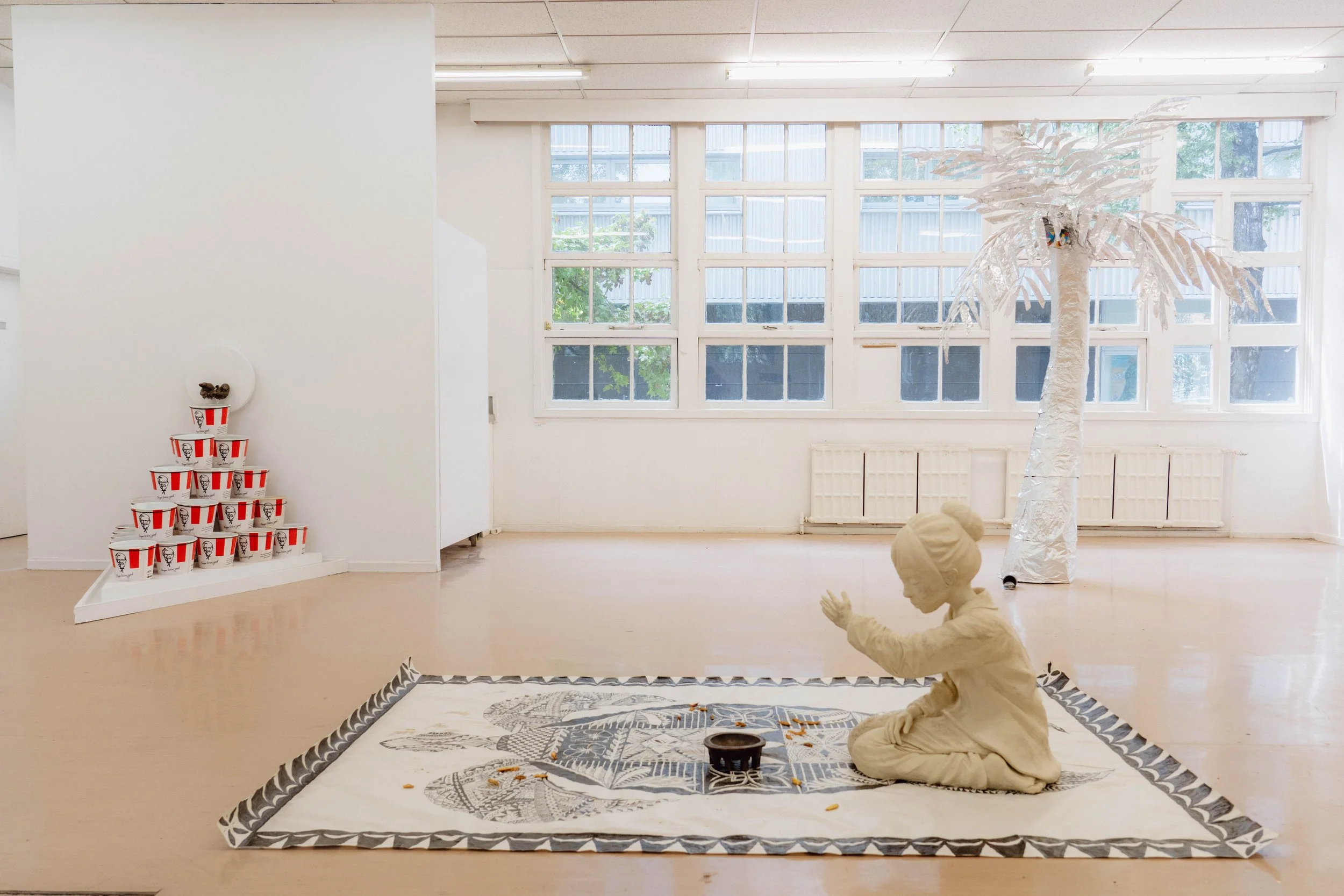
The bronze-cast kava bowl in the collection serves as a memorialization of an item now relegated to ornamental status due to its rarity. Traditionally a vessel for social connection and ritual, the kava bowl has in New Zealand been largely supplanted by globally recognized modern substitutes. This piece is paired with a tapa cloth fabricated from fish-and-chip paper, a material intimately tied to the artist’s childhood recollections of shared family meals.
The paper is hand-painted using lama, a traditional Samoan ink derived from burnt candlenuts, thereby transfiguring a disposable, everyday material into one imbued with sacredness. This act reflects pride in ancestral heritage while acknowledging contemporary cultural shifts. While fish-and-chip paper is typically regarded as ephemeral, its treatment as tapa asserts the idea that meaning and spirituality are not confined to traditional materials but are instead located in the beliefs and values inscribed onto them. A turtle motif—symbolizing aiga (family)—reinforces the notion that these contemporary substitutes are not superficial but deeply resonant adaptations of cultural continuity within a diasporic context.
Simultaneously, the work critiques the health and environmental consequences of such adaptation. The paper, stained with canola oil and remnants from a shared meal, visually echoes the metabolic and nutritional crises intertwined with these foods. The piece invites contemplation of the dualities at play: the aesthetic and emotional beauty of cultural preservation alongside the physiological and ecological costs of displacement-driven adaptation.
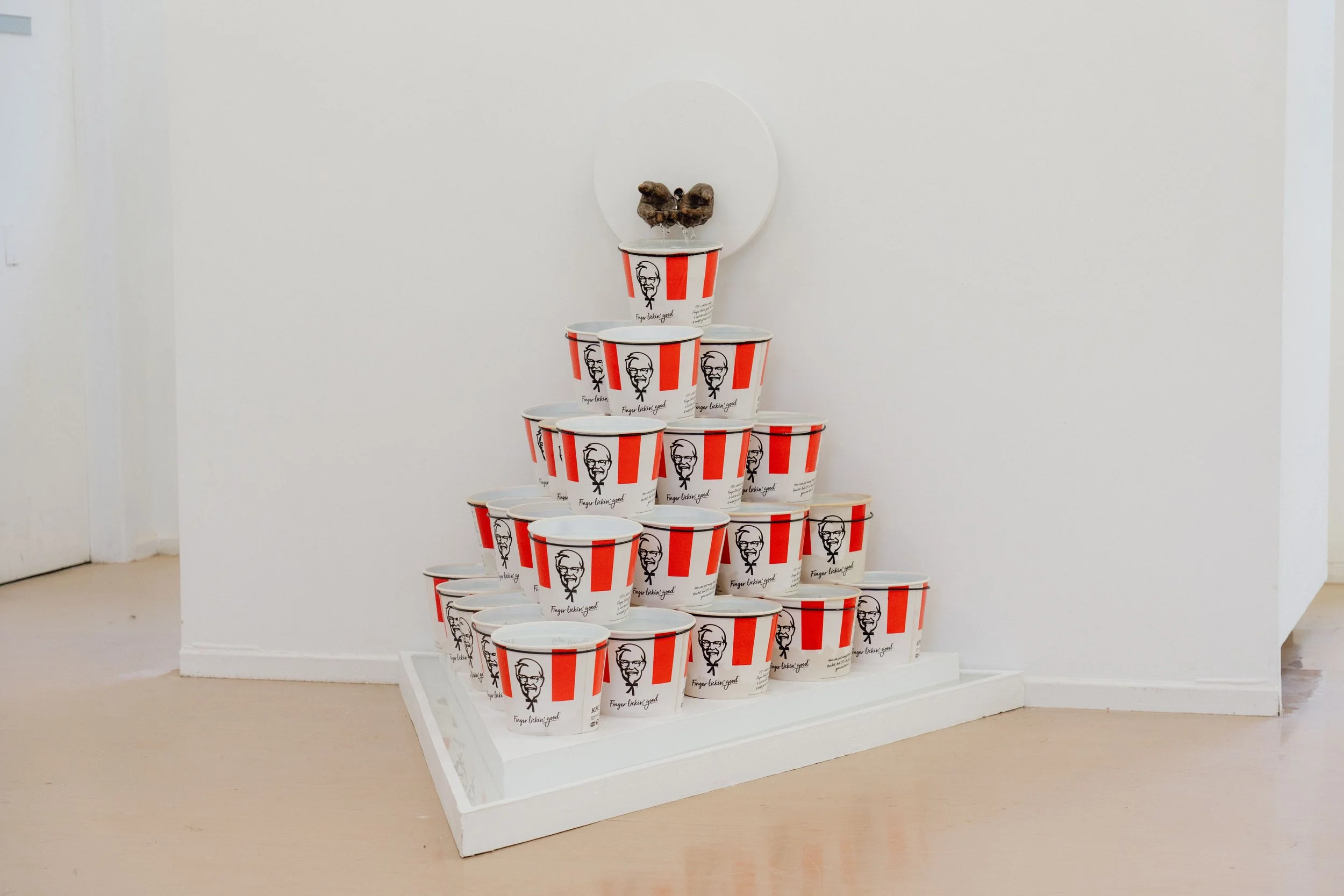
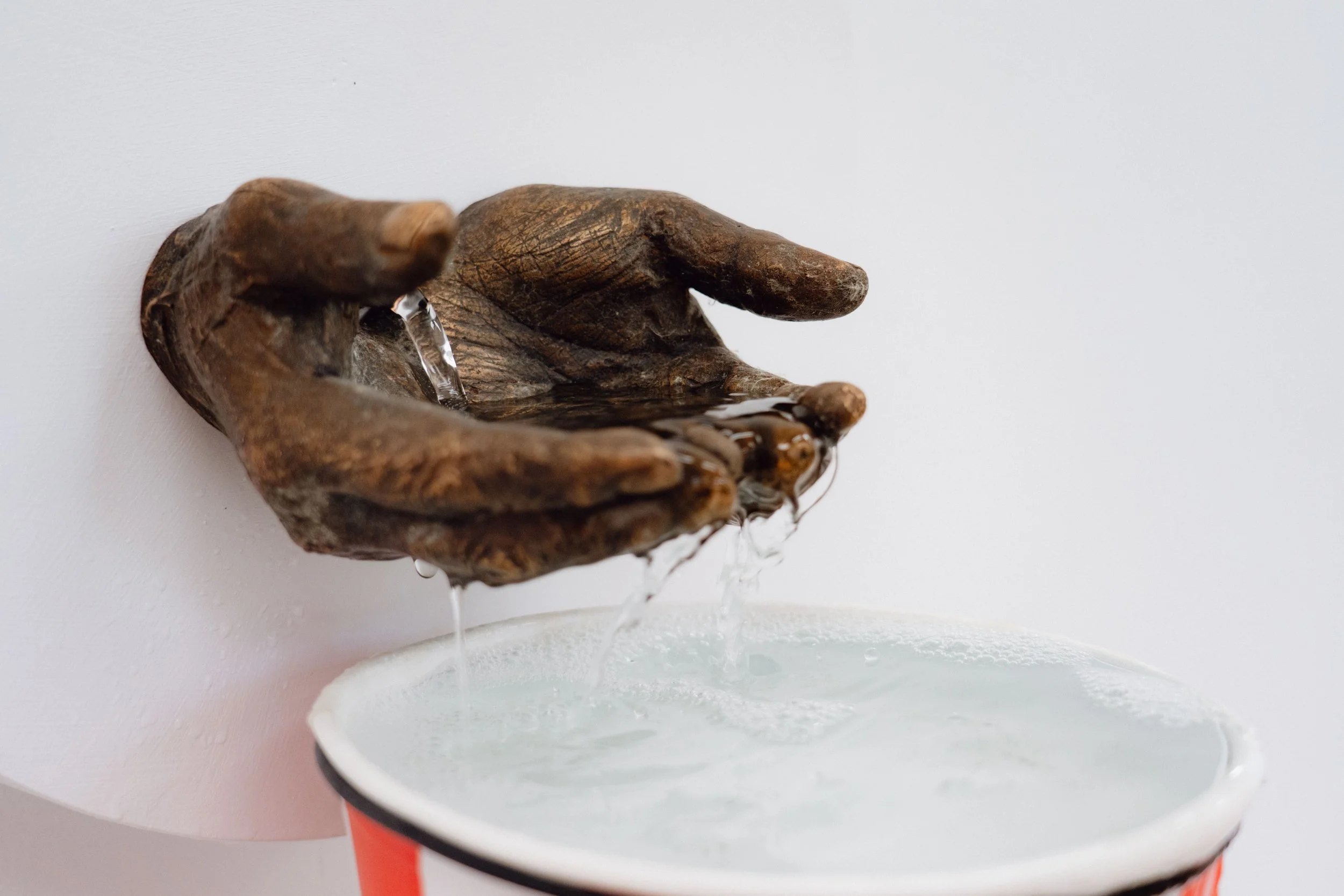
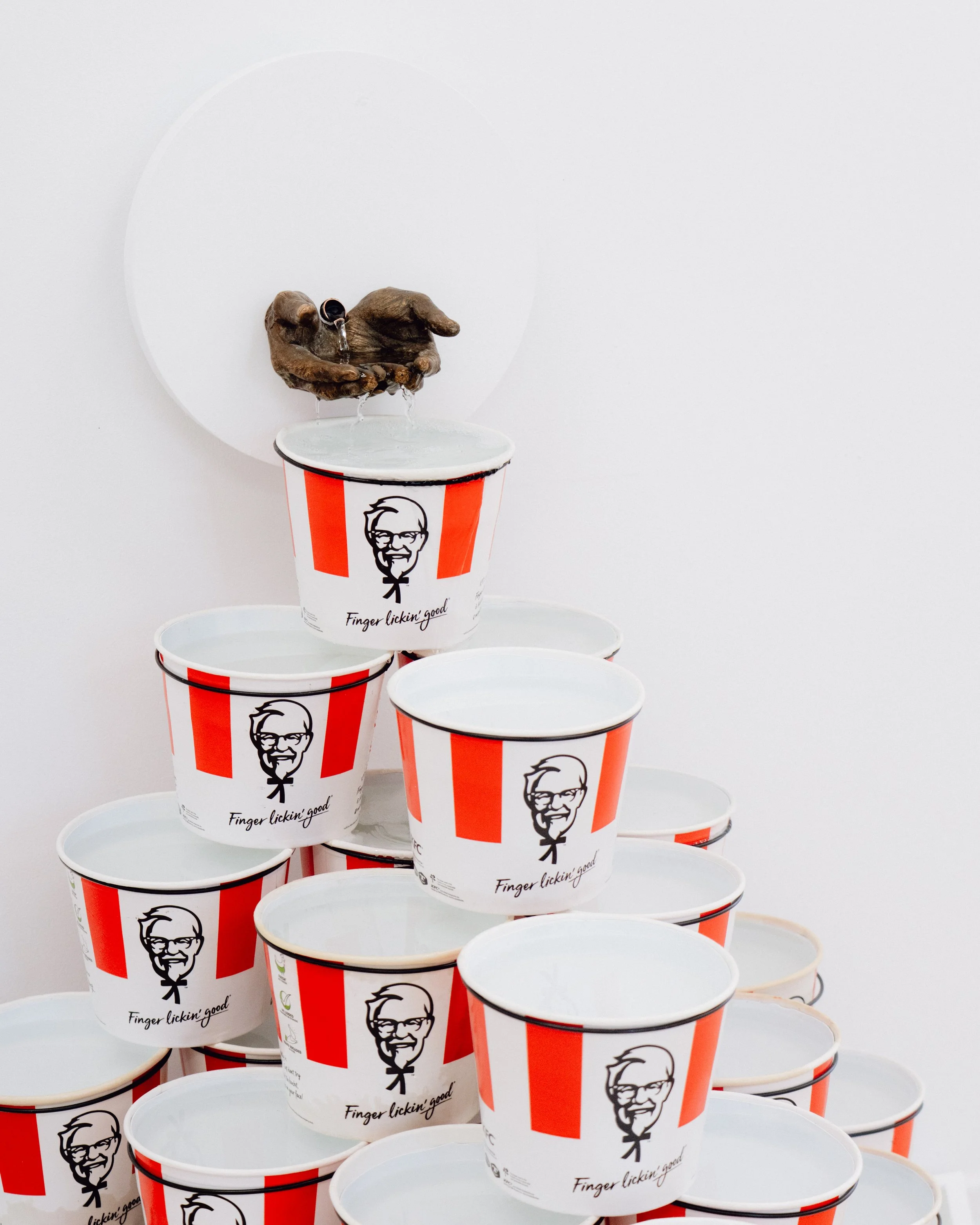
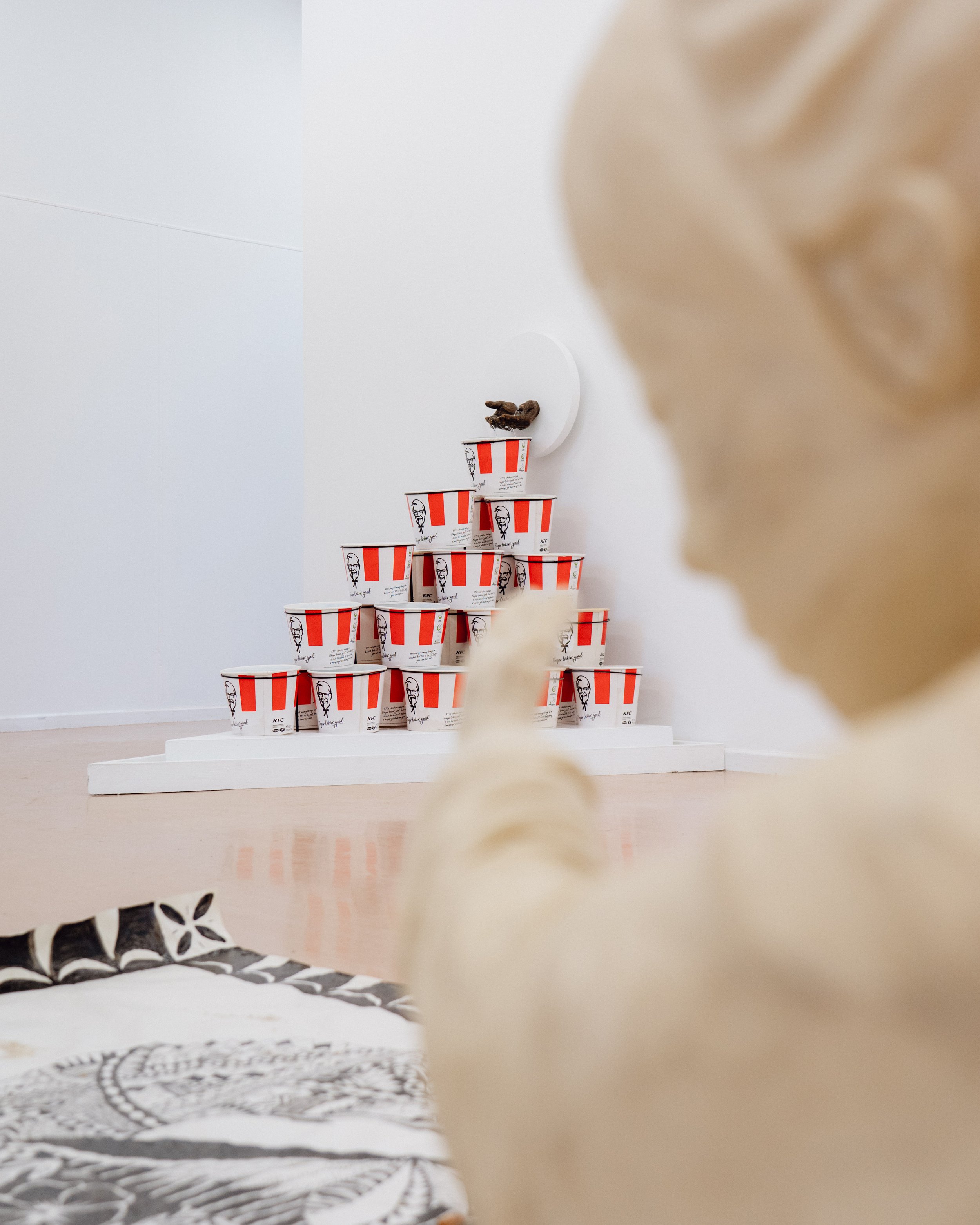
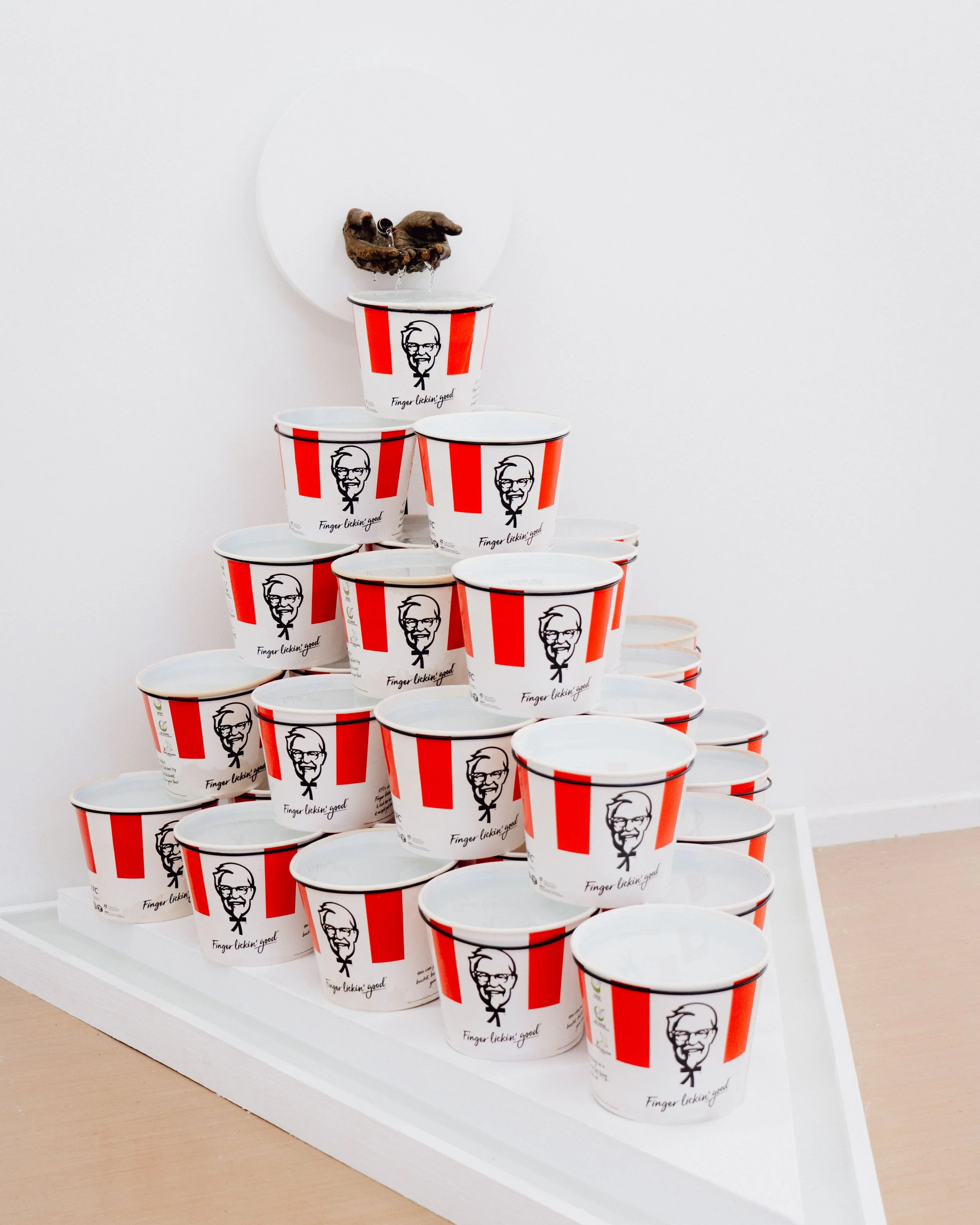
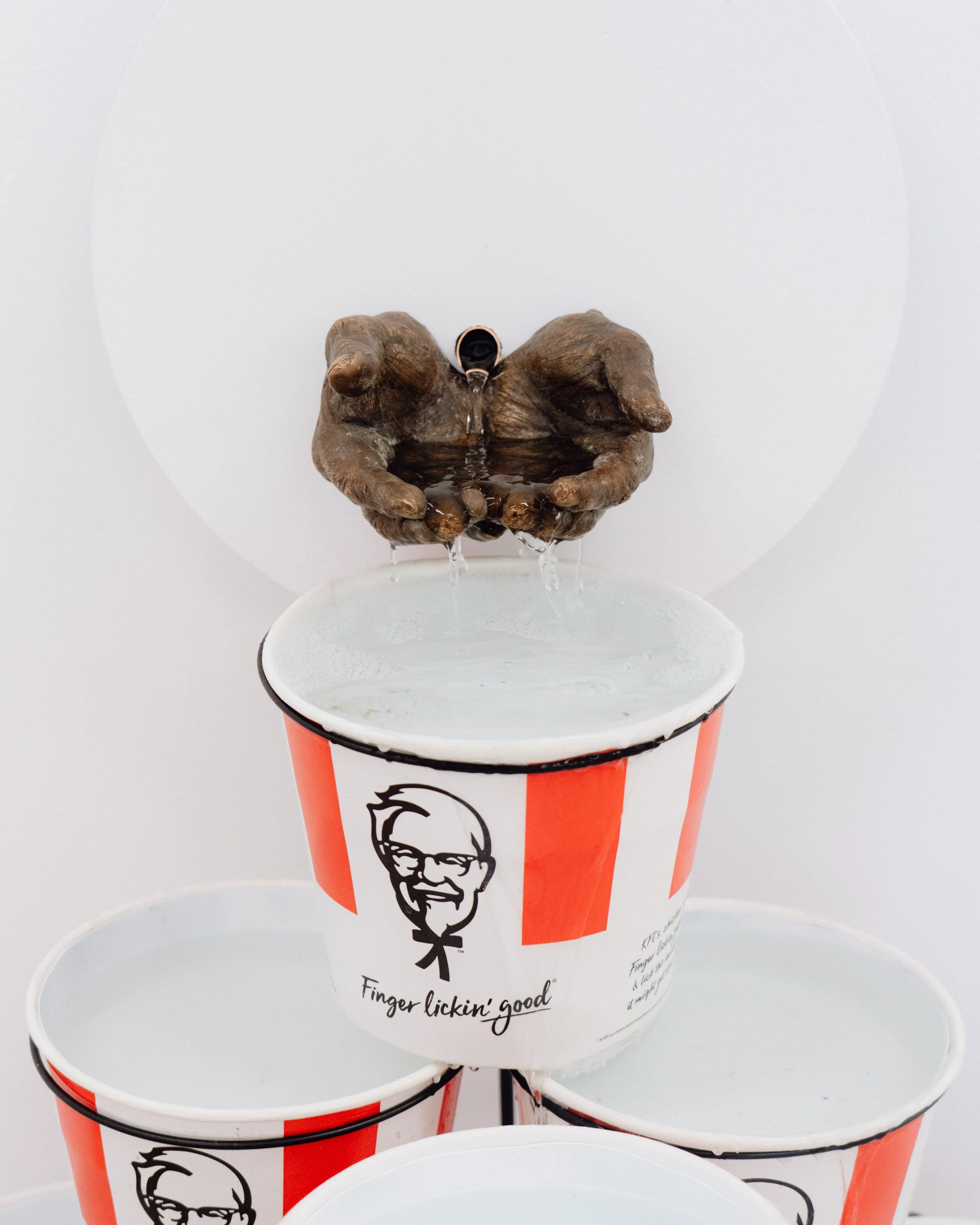
The Bronze Cast of My Grandfather’s Hands emerges from a profound fear of generational loss, particularly the potential passing of the artist’s grandfather—his most enduring connection to Samoa. Cast in bronze, the hands become an eternal gesture of connection, defying the temporal limitations of life. Having already outlived medical expectations while living with heart failure, the grandfather’s presence is both miraculous and fleeting. In the work, his bronze hands cradle suavai(the spirit of life), which flows into a pyramid of KFC share buckets. These buckets, emblematic of communal consumption, are unable to capture the liquid, symbolizing the elusive and intangible nature of cultural retention. The piece references personal memories of shared KFC meals with the grandfather—moments that, like water, escape retention. It articulates the fragile and often incomplete nature of heritage preservation amid modern identities. While initially perceived as kitsch or stereotypical of Pacifica culture—a response frequently encountered in early discussions of the work—this superficial playfulness belies deeper undertones. It foregrounds the precarious balance between honoring tradition and confronting its erosion, between authenticity and the inevitability of cultural hybridity.
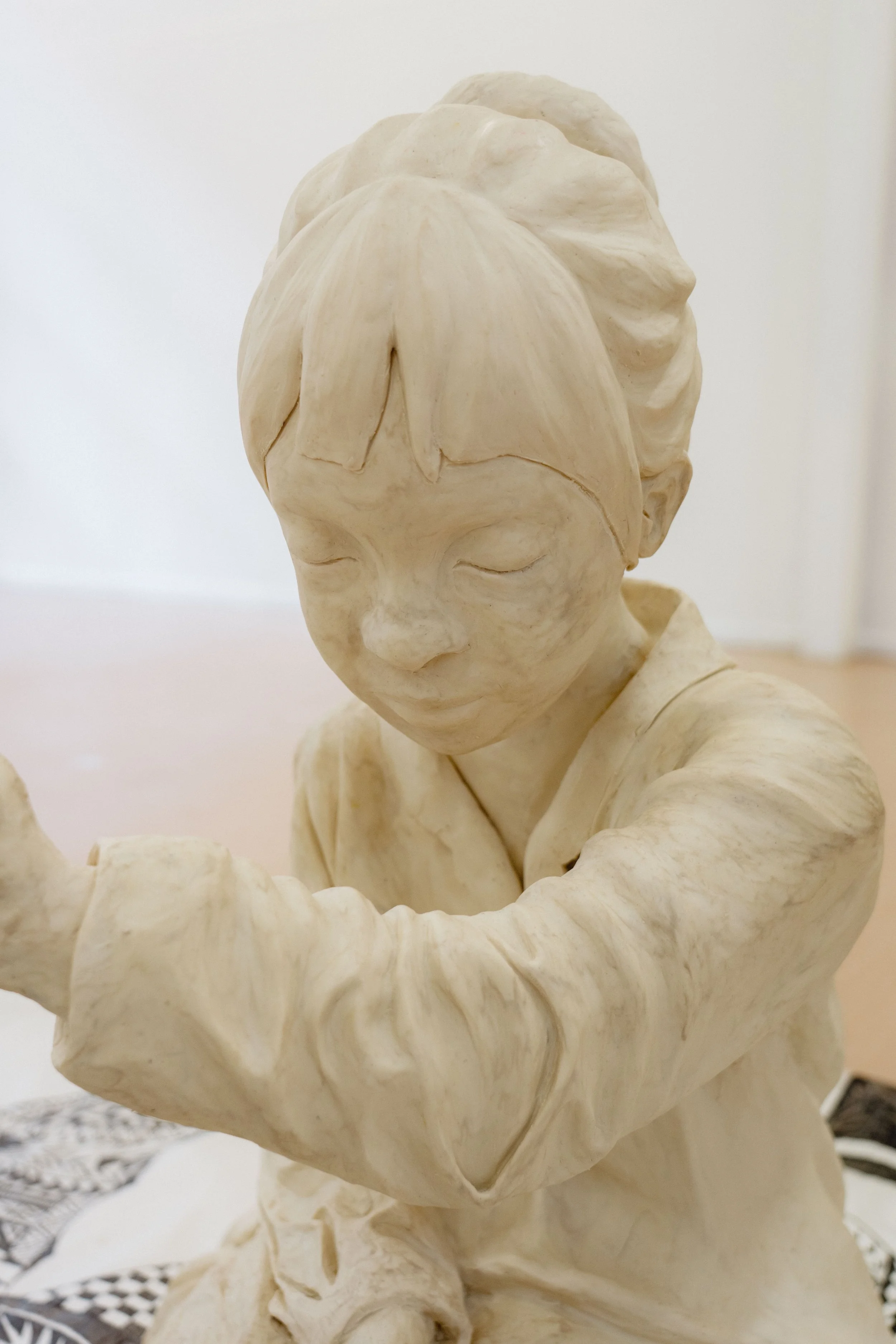
A self-portrait rendered in plasticine captures the artist at nine years old—the same age at which the material was first explored. The unrefined, pale figure reaches toward the grandfather’s bronze hands, eyes fixed on the silhouette of a kava bowl. Plasticine, malleable and responsive, symbolizes an identity in flux—shaped by time, experience, and context. Set against the permanence of bronze, the soft figure leans into the solidity, emphasizing the dialectic between impermanence and preservation. As the material absorbs environmental marks, it becomes marbled—visually encoding the mutable influence of cultural, spatial, and temporal forces on the formation of identity. Collectively, the work reflects an enduring longing to maintain cultural lineage while reckoning with the inevitability of transformation.
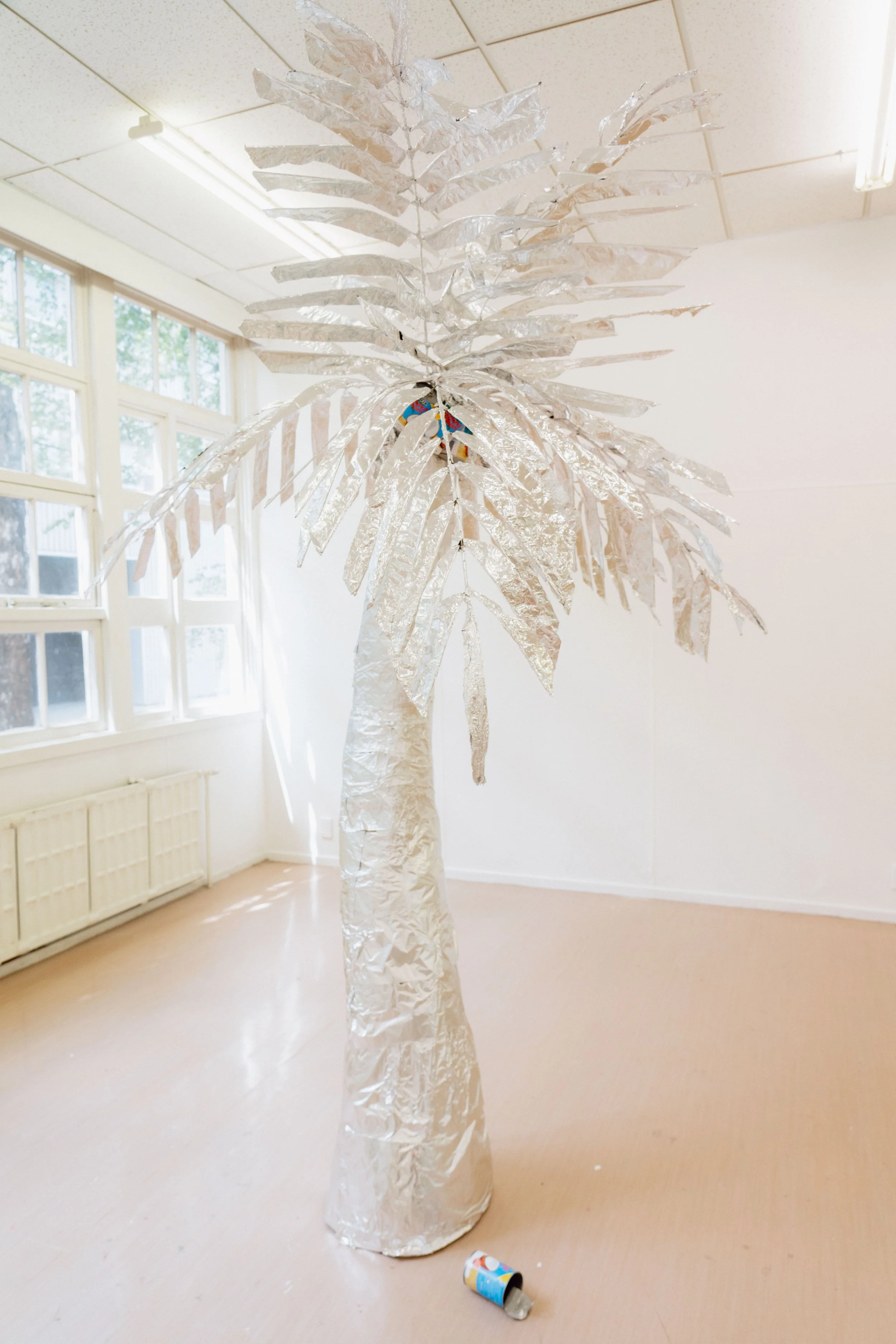
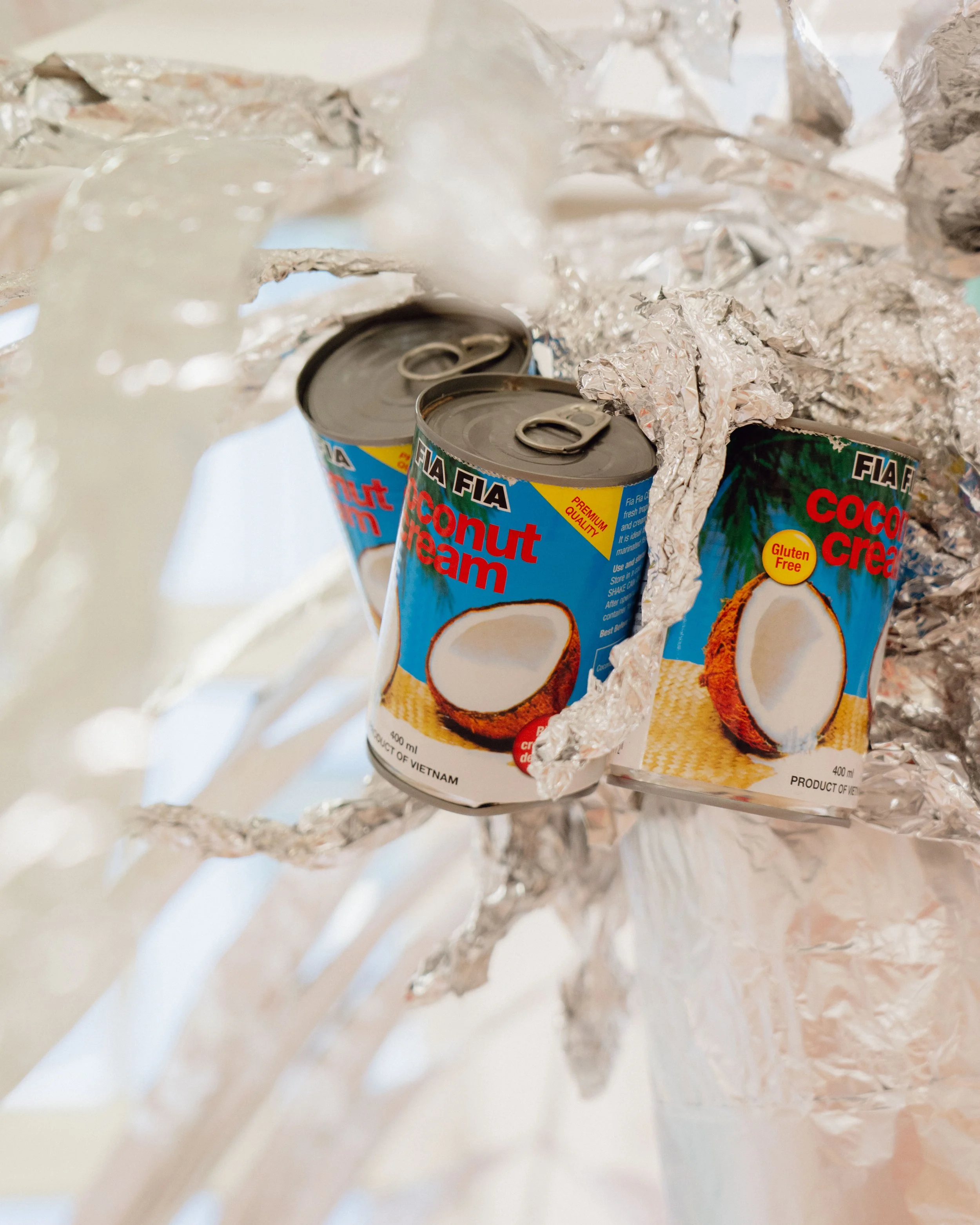
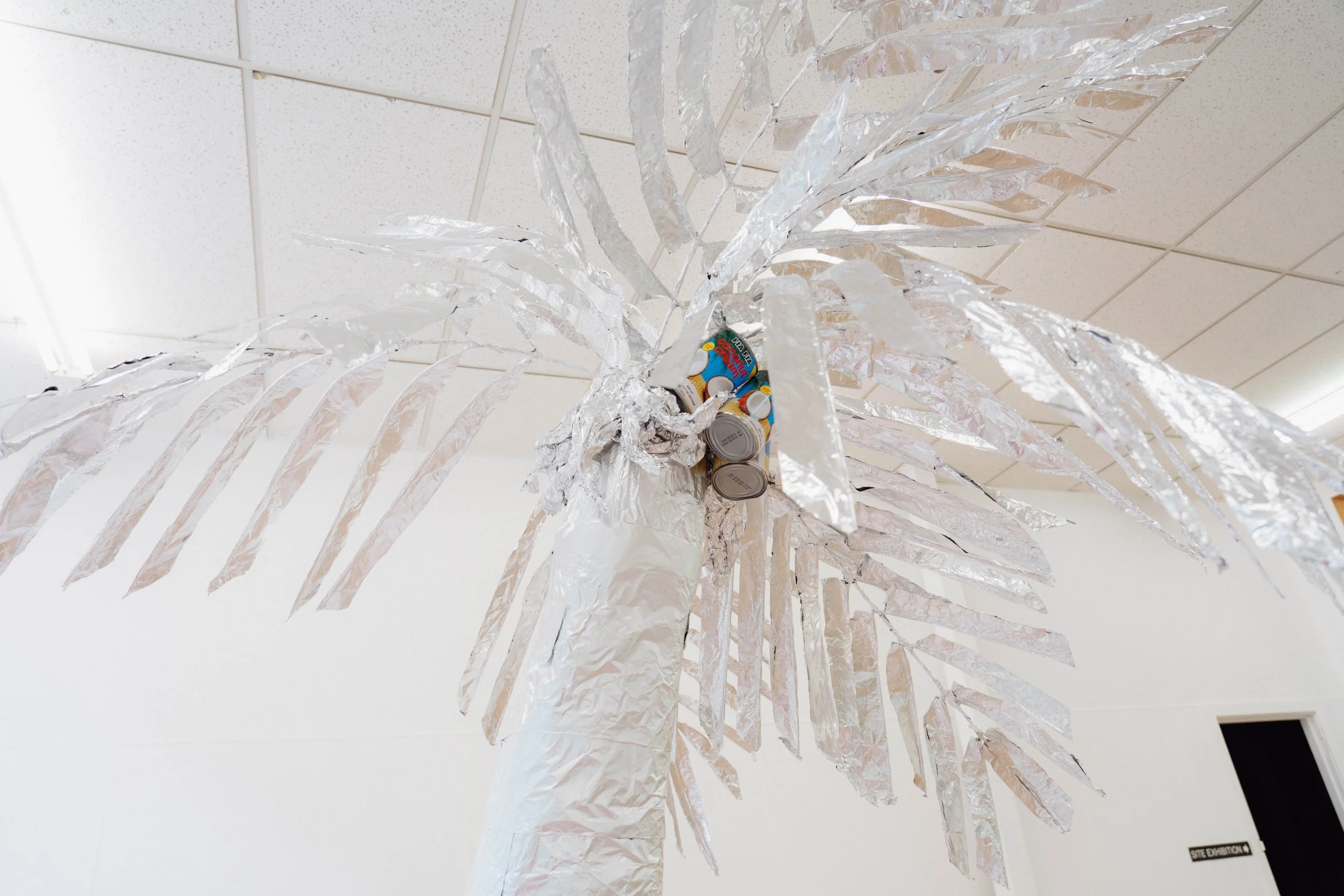
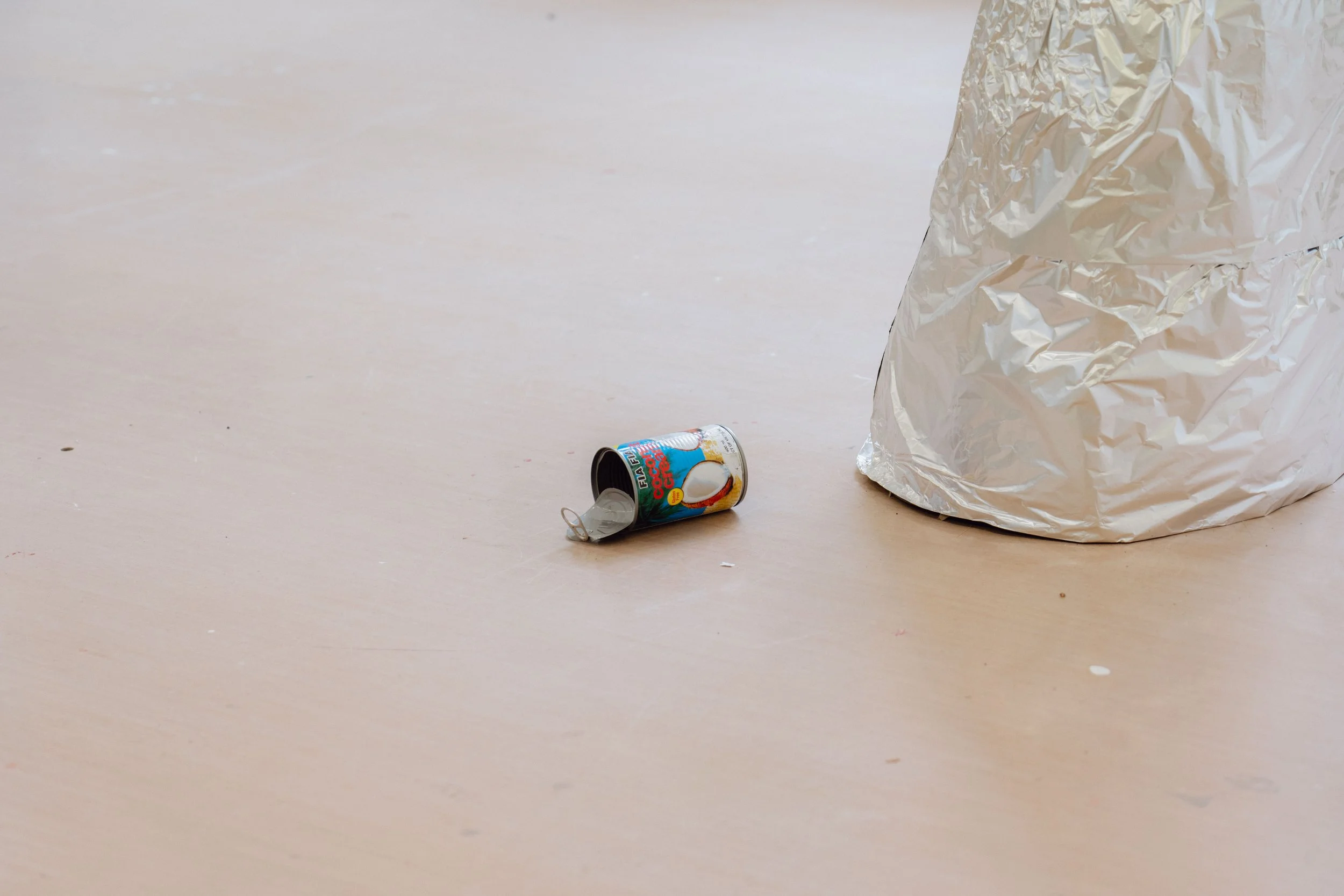
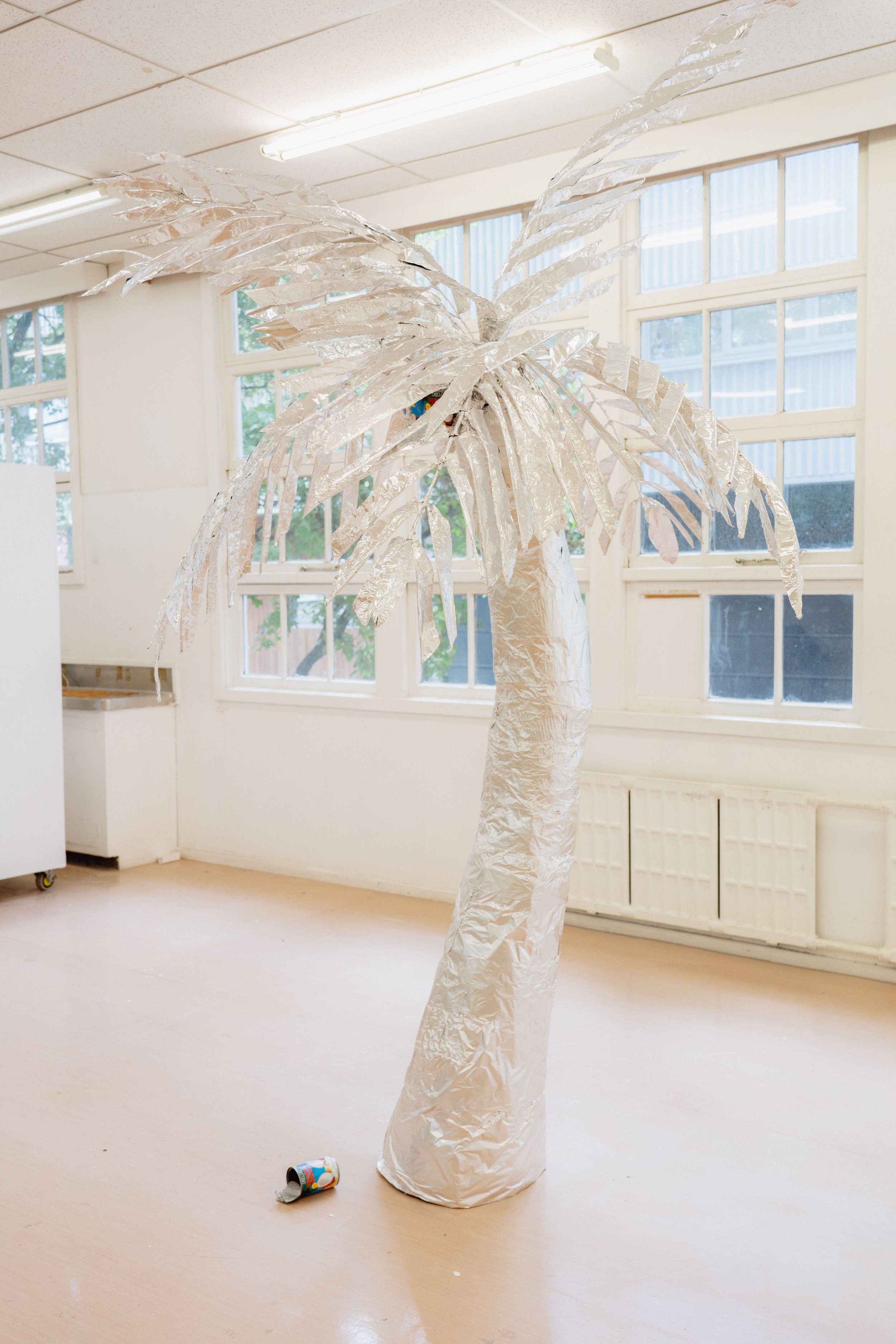
The aluminium-foil coconut tree, adorned with Fia Fia-branded coconut cream, captures the adaptive strategies of Pacifica families in Aotearoa. Traditional materials such as coconut leaves are replaced with what is readily accessible—foil and canned cream—revealing the compromises demanded by migration. Despite these substitutions, the tree retains its symbolic function as the “tree of life.” It reflects the enduring resilience of Pacifica communities, who sustain cultural practices amid spatial and material dislocation. Yet, the piece also critically engages with how displacement necessitates a hybrid identity—an identity forged in the space between practicality and cultural erosion.
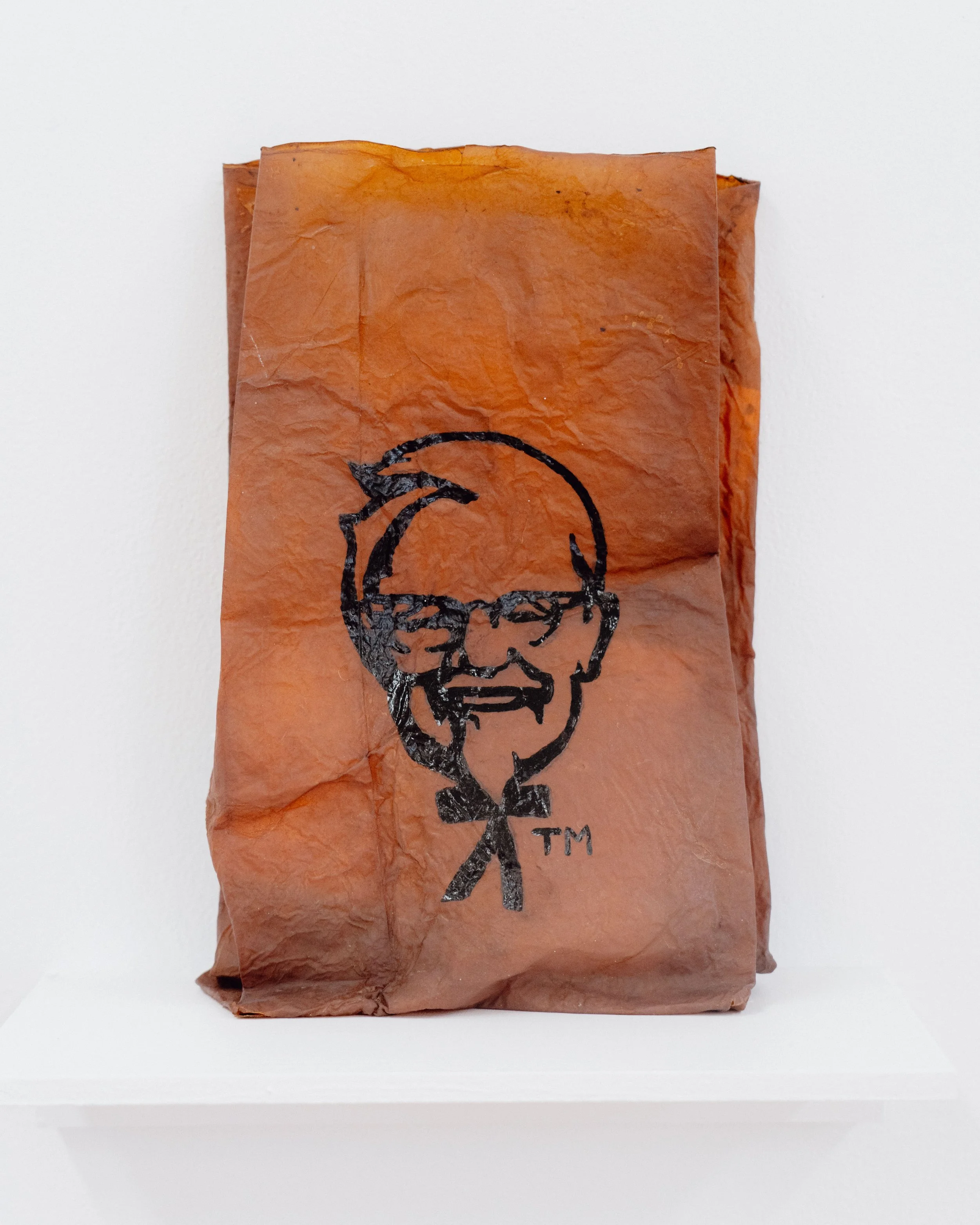
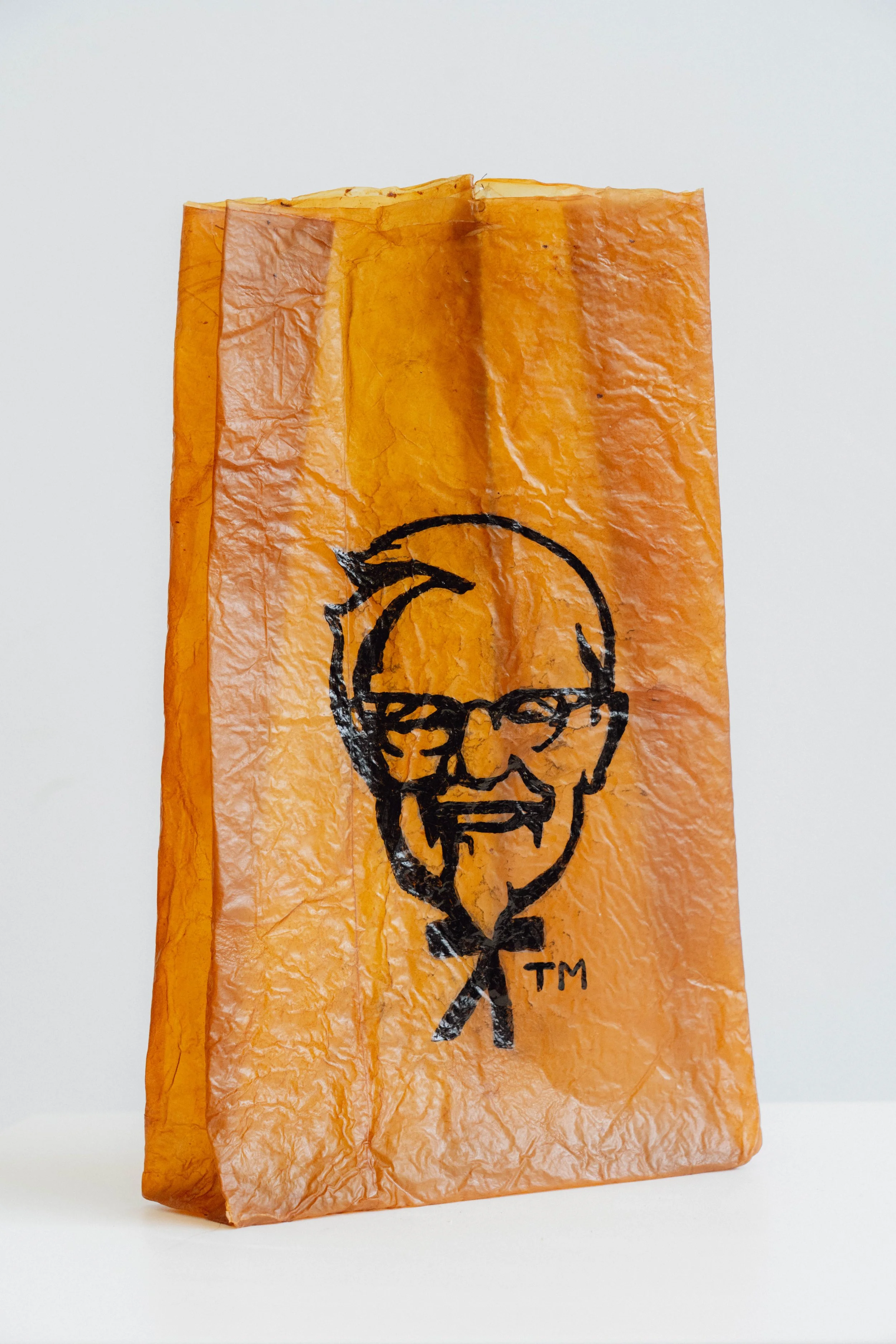
A final work features a KFC bag fabricated from kombucha SCOBY, a material the artist cultivated over six months. This fermentation process transforms a transient consumer object into something enduring, drawing attention to cycles of time, care, and resilience. The bag, painted with lama and bearing the image of Colonel Sanders, overlays a mass-market food symbol with personal cultural resonance. Here, nourishment and commodification collide. SCOBY—a symbiotic culture of yeast and bacteria—serves as the only living or semi-living material in the exhibition, directly referencing gut health. This choice is especially pointed in light of research linking gut health to broader physiological well-being. In stark contrast to fast food’s detrimental effects, SCOBY represents regeneration and biological vitality. Yet, it too becomes marked by the environment—imprinted with commercial iconography, stained by context. These imprints signify how external forces continually reshape identity, health, and culture. The work poses a powerful inquiry into the blurred boundaries between sustenance and harm, preservation and adaptation, tradition and commodification.